
It is possible to know many Bible stories and still miss the story of the Bible.
We may know Adam and Eve, Noah and the flood, Abraham and Isaac, Moses and the Exodus, David and Goliath, Daniel in the lions’ den, and countless other narratives, yet still approach them as largely independent stories bound together in one volume. When that happens, Scripture can easily become a collection of moral examples. David teaches courage. Daniel teaches boldness. Abraham teaches faith. Moses teaches leadership. We begin speaking in phrases such as “Dare to be a Daniel,” and the landing point of the biblical story becomes us—be braver, obey better, believe harder.
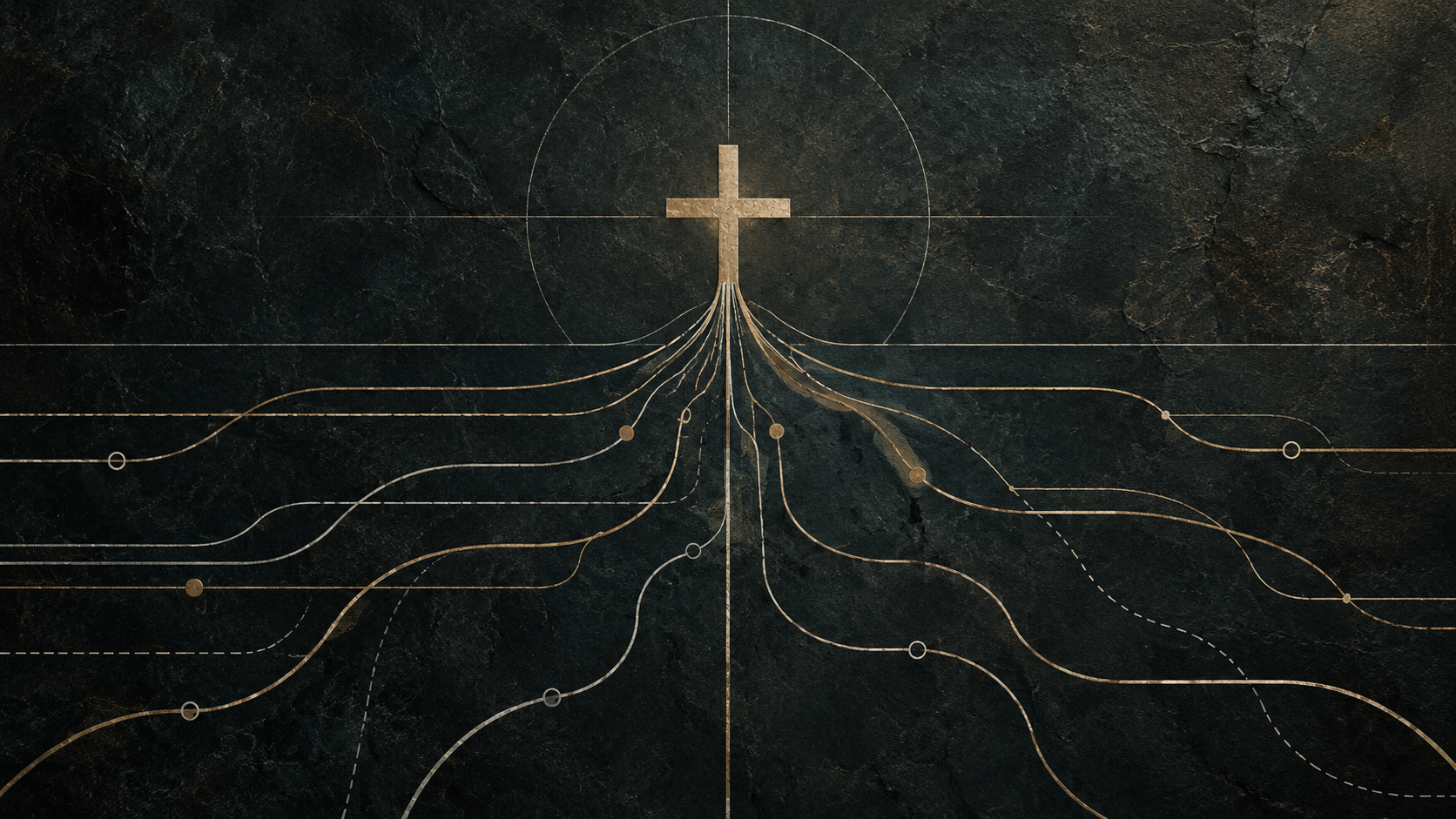
Certainly, Scripture gives us examples worth imitating, but none of its human heroes is the center of the story. At their best, they point beyond themselves to the One they could never be. The covenants provide the backbone that holds Scripture together. Through them, God progressively reveals His sovereign purpose of redemption, narrowing the promise through particular people and institutions until every line converges in the person and work of Jesus Christ.
The thesis is simple: God has ordained the covenants as the framework through which His redemptive purposes unfold, and those purposes reach their fulfilment in Christ, His people, and ultimately the New Creation.
Adam: The Universal Representative
The story begins not with Israel but with creation itself. Adam is created in the image of God and appointed to represent humanity before God. He is commissioned to be fruitful, multiply, fill the earth, subdue it, and exercise dominion under God’s rule (). His calling is therefore both royal and priestly: he is to rule God’s world while living in obedient fellowship with his Creator. But Adam fails. His rebellion brings sin, death, curse, and alienation into the world. Yet even in judgment, God gives promise. The offspring of the woman will one day crush the serpent’s head (). From the opening chapters of Scripture, then, humanity’s problem and humanity’s hope are established. We need another representative, a faithful man who will obey where Adam disobeyed, defeat the serpent, reverse the curse, and bring life where Adam brought death. Paul later identifies Christ as precisely this figure: the “last Adam” through whom righteousness and life come to His people ( ). The whole biblical story begins under Adam’s failed headship and moves toward Christ’s faithful one.
Noah: Adam 2.0
After generations of increasing violence and rebellion, the flood brings judgment upon the world. Noah emerges from the waters into what looks almost like a recreated world. God blesses him, commands him to be fruitful and multiply, and gives him a commission that deliberately echoes Adam’s original mandate. In this sense, Noah appears as an Adam 2.0, a new representative standing at the head of humanity after judgment. Yet almost immediately, Noah too falls into sin. The problem has not been solved. Humanity still needs something more. Nevertheless, the covenant with Noah plays an essential role in redemptive history. God promises to preserve the created order—seedtime and harvest, cold and heat, summer and winter—so that history may continue and His saving purposes may unfold (). Noah therefore establishes both a pattern and a stage: judgment falls, yet God preserves a people through judgment; creation continues because redemption is still coming. The flood points forward to the greater reality in which Christ bears judgment for His people and brings them through death into new creation. Noah preserves humanity after judgment, but Christ brings a redeemed humanity through judgment into resurrection life.
Abraham: The Promise Narrows
With Abraham, the story narrows dramatically. God does not begin again with all humanity in the same way He did with Noah. Instead, He chooses one man, one household, and one bloodline. Abraham is promised land, offspring, nationhood, blessing, and most significantly, blessing to all the nations of the earth (). The saving purpose of God is now concentrated in a particular family. From this point onward, the question becomes: through which offspring will the promise come? The line passes through Isaac, not Ishmael; Jacob, not Esau; Judah, not his brothers. The promise becomes increasingly particular. Yet its purpose remains universal. Paul makes the fulfilment explicit when he writes that the promise was ultimately made to Abraham’s “offspring,” who is Christ (). In Him the narrowing reaches its final point and then widens again. Those who belong to Christ become Abraham’s offspring and heirs according to promise (). The nations are blessed not by abandoning Abraham’s line but by being joined through faith to the One in whom that line reaches its goal.
Moses: A Holy Nation
Under Moses, Abraham’s family becomes a nation. Israel is redeemed from slavery through the Exodus, brought through the waters, gathered at Sinai, and established as God’s covenant people. Here the Bible develops the great vocabulary of redemption: Passover, law, covenant, priesthood, sacrifice, blood, tabernacle, holiness, uncleanness, mediation, and atonement. The Exodus demonstrates that God saves His people from bondage through judgment. The Passover lamb dies so that God’s people may live. The tabernacle establishes God’s dwelling in the midst of His people, yet also teaches that sinful man cannot approach a holy God casually. Priests, sacrifices, cleansing, and blood are necessary. Leviticus reaches its symbolic climax in the Day of Atonement, when sacrifice is offered, blood enters the Most Holy Place, and guilt is symbolically carried away through the scapegoat (). Yet the whole Mosaic system is provisional. The sacrifices must be repeated. The priests themselves are sinners. Israel breaks the covenant repeatedly. The tabernacle and later temple make access possible while simultaneously reminding the people that access remains restricted. The system therefore creates expectation. We need a greater Exodus, a true Passover Lamb, a perfect Priest, a final sacrifice, a true temple, and an atonement that actually removes sin. The Mosaic covenant gives us the categories; Christ will fill them with reality.
David: The Everlasting King
The covenantal promise narrows again with David. God promises that one of David’s sons will sit upon his throne and that his kingdom will endure forever (). From this point onward, the hope of Israel becomes increasingly royal. The prophets speak of a righteous Davidic ruler, a branch from Jesse, a king who will reign in justice, defeat God’s enemies, and shepherd His people. Yet the historical kings repeatedly fail. Even David himself is deeply flawed, and the monarchy eventually collapses into exile. The question therefore becomes unavoidable: where is the promised Son of David whose throne will never end? The New Testament answers from its opening line: “Jesus Christ, the son of David, the son of Abraham” (). Gabriel later tells Mary that God will give Jesus “the throne of his father David” and that “of his kingdom there will be no end” (). The covenantal line has narrowed from humanity, to Noah, to Abraham, to Israel, to Judah, to David—and now finally to one King.
The Prophets and the Promise of the New Covenant
Israel’s repeated covenant failure raises a deeper problem. The issue is not merely bad leadership or poor circumstances. The problem is the human heart. The prophets therefore begin speaking of something new. Isaiah anticipates a suffering Servant who will bear the sins of many, a righteous King, and a renewed creation. Jeremiah promises a New Covenant unlike the covenant Israel broke: God’s law will be written on the heart, His people will know Him, and their sins will be remembered no more (). Ezekiel promises cleansing, a new heart, a new spirit, and the indwelling Spirit of God (). The prophets are not abandoning the earlier covenants. They are showing what those covenants were always moving toward. Humanity needs more than law written on stone; we need transformed hearts. We need more than repeated sacrifices; we need final forgiveness. We need more than temporary access to God; we need His permanent presence. We need not merely another king, priest, or prophet, but One who will fulfil every role and secure every promise.
Jesus Christ: The Fulfilment
The New Testament announces that the One has come. Jesus is the last Adam, Abraham’s promised Seed, true Israel, the greater Moses, the Passover Lamb, the true Temple, the great High Priest, the final sacrifice, the Son of David, and the Mediator of the New Covenant. At the Last Supper He takes the cup and declares, “This cup that is poured out for you is the new covenant in my blood” (). Every covenantal line converges in Him. He obeys where Adam and Israel failed. He bears the covenant curse. His blood secures forgiveness. His resurrection inaugurates new creation. His exaltation places the Son of David upon the everlasting throne. And those united to Him become His people—the Church, gathered from every tribe, tongue, nation, and people. The saving identity that narrowed through Abraham’s bloodline now expands through union with Christ. Jew and Gentile alike are incorporated into the people of God through faith in the promised Seed. The Church therefore enters the covenant story only through union with Christ; every covenant blessing belongs to His people because they belong to Him. Every covenant blessing is ours only in union with the covenant Lord.
Revelation: The Consummation of God’s Saving Purpose
The Bible ends where the covenant story has always been heading: God dwelling with His redeemed people in a renewed creation. Revelation does not introduce an unrelated conclusion to Scripture. It completes the patterns established from Genesis onward. The serpent introduced in Eden is finally destroyed. The curse is removed. God’s people inherit the earth. The nations are gathered before the Lamb. The throne of the everlasting King stands secure. There is no temple in the New Jerusalem because “its temple is the Lord God the Almighty and the Lamb” (). The dwelling place of God is with man, and His servants see His face. What Adam lost is restored and surpassed in Christ. What Noah preserved is renewed. What Abraham was promised encompasses the nations. What Israel pictured becomes reality. What Moses mediated finds permanent fulfilment. What David anticipated becomes everlasting rule. What the prophets promised becomes sight.
The Story Finds Its Center in Christ
This is why the Bible must be read as one story.
The covenants are not incidental details scattered through Scripture. They are the divinely ordained structure through which God unfolds His sovereign purpose of salvation. They teach us what humanity needs, progressively narrow the promise, and finally direct our eyes to Christ.
If we miss this, the Bible easily collapses into moralism. We read Daniel and conclude that we should simply be braver. We read David and conclude that we should conquer our personal giants. We read Moses and look for leadership principles.
But Daniel needs Christ. David needs Christ. Moses needs Christ. Abraham needs Christ. Israel needs Christ. And so do we.
The great purpose of biblical theology is not merely to make us better at tracing themes. It is to teach us to see the glory of Jesus Christ across the whole counsel of God. The covenants show us that the God who planned redemption has also accomplished it, and that history itself is moving toward the complete glorification of His Son.
The story begins with creation. It passes through covenant. It finds its center in Christ. And it ends with the Lamb upon the throne and His redeemed people dwelling with God forever.
Notes:
I am especially indebted to Peter J. Gentry and Stephen J. Wellum’s Kingdom through Covenant, which has significantly shaped my understanding of the covenants as the framework of Scripture’s unfolding story fulfilled in Christ.
Gentry, Peter J., and Stephen J. Wellum. Kingdom through Covenant: A Biblical-Theological Understanding of the Covenants. 2nd ed. Wheaton, IL: Crossway, 2018.